How to Plan a Seating Chart for a Big Wedding
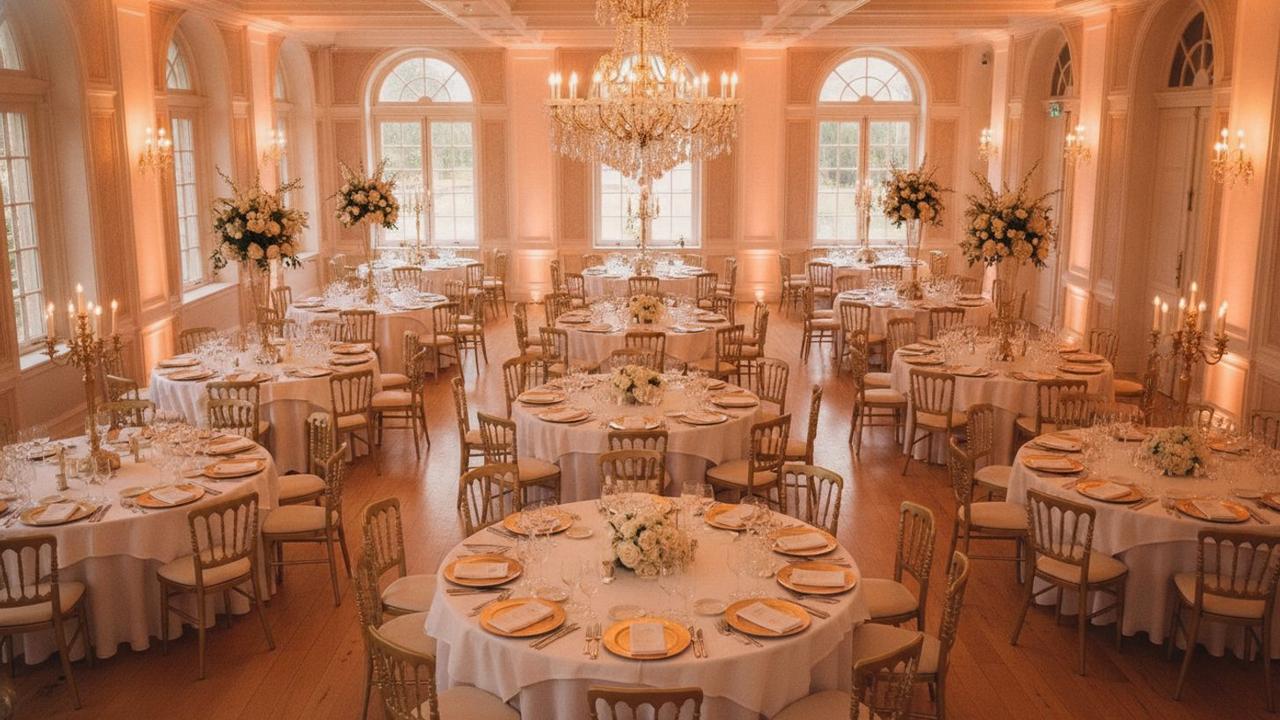
AI-generated image
A seating plan for a big wedding, roughly 100 guests or more, needs a different approach from a small one. Group your guests by household and relationship first, work out your real table count from your venue's actual room capacity, and hold off placing individual names until RSVPs have mostly settled. Treating it as a system rather than a puzzle is what keeps it manageable.
Under about 80 guests, a seating chart is a fun evening with wine and sticky notes. Past that, it turns into something closer to a logistics problem: dozens of tables, a guest list that's still shifting two weeks out, allergens to track per table, and a top table order that three separate relatives have opinions about. The sticky-note method that works fine for a small wedding falls over completely once you're rearranging twenty tables by hand every time someone's plus-one drops out.
Here's a system that holds up at scale, and doesn't assume you have a spare weekend.
Large wedding seating chart: work out your real table count first
Before you touch names, work out roughly how many tables you're planning for. It changes everything downstream, from how you group guests to how much room you need.
- Round tables at 5ft6in, the most common UK banqueting size, seat 10. A 6ft round seats 10 to 12.
- Rectangular trestle tables seat 6 to 8 at 6ft, or 8 to 10 at 8ft.
- The average UK wedding has around 80 guests, per Bridebook's UK Wedding Report 2026, which works out to roughly 8 to 10 tables.
- A big wedding, 150 to 200 or more guests, is commonly 15 to 25 tables, depending on table size. Plan your floor layout with that many shapes from the start, rather than discovering halfway through that the room doesn't fit them.
Ask your venue for the room's real capacity in tables, not just guests. Dance floor, band, bar and buffet all take space away from where tables can go, and that matters more at 20 tables than at 8.
Round tables are not your only option. In a long or narrow room, banquet rows, a comb (E shape), a horseshoe or a serpentine can seat a big guest list at fewer, longer tables, and the Fizz seating planner draws each of them to scale. Our guide to wedding table layouts compared sets out the seat range of each shape and which kind of room suits it.
Group before you place
Placing individual names table by table is where big weddings go wrong. It's slow, and it's easy to accidentally split people who came together. Group first, place second:
- Households and couples travel as a unit. Anyone who RSVP'd together, or who has a plus-one, should be treated as one block from the start, not assigned separately.
- Children sit with their parents, or at a small kids' table near them if you're running one, never scattered among unrelated adults.
- Divorced or separated family members often need to be kept at a comfortable distance without it being obvious. Note these as "keep apart" pairs rather than trying to remember them by eye across 200 names.
- Friend groups and work colleagues are natural table-sized units. A table of 8 to 10 from the same friend group is usually the easiest table in the room.
Once your guests are grouped, the actual table-by-table placement is mostly assembling blocks, not solving 150 individual puzzles.
Don't build it before your RSVPs are in
The biggest time-sink in a big wedding seating plan is building it too early and then rebuilding it every time a response changes. Wait until RSVPs are substantially in, see how to set up online RSVPs for your wedding if you haven't already. You can start the room layout and table sizing earlier, but hold off seating actual names until the guest list has mostly settled. A seating tool tied to your live RSVP list handles this naturally: confirmed guests appear ready to seat with their meal choice and dietary needs already attached, and anyone who declines simply disappears from the room rather than leaving a phantom seat you have to remember to delete.
That live link matters more at scale. A dozen late changes across a 200-guest wedding is normal, not an edge case. Plan for it rather than treating each change as a fire drill.
Wedding table plan software: let a tool group first, then fix the handful that need a human
Auto-arrange tools that understand households, "sits with" and "sits apart from" rules, and table capacity can place the bulk of a big guest list in seconds, the tedious, mechanical 80% of the job. What's left after that is the genuinely judgement-based decisions: who's on the top table, how to handle the one complicated family split, which two friend groups should actually be combined onto one table rather than each getting an awkward half-full one.
On Celebrate and Champagne, an AI seating assistant can also take specific requests in plain language, such as keeping one family together and away from a particular table, and propose a plan for you to review. See the plan comparison for what's included on each tier.
Do the auto-arrange first, then spend your actual attention on the six or seven tables that need a person's judgement, not a rule. That's a very different job from placing 200 names by hand, and it's the difference between seating a big wedding in an afternoon versus a lost weekend.
What to hand your venue and caterer
At this scale, your caterer needs numbers they can actually cook to, and your venue needs a plan they can set the room from. Three things make that handover painless:
- A per-table meal and allergen breakdown, for example "Table 12: 6 beef, 3 vegetarian, 1 vegan, one guest allergic to nuts", not a flat headcount they have to cross-reference against a separate dietary list. For a buffet there are no meals to count, so give them the headcount per table and every guest's dietary notes instead.
- A printable table plan for the entrance, so guests can find their seat without a queue forming around one small easel card.
- Place cards printed from the same seated list, so nobody hand-writes 200 names the week of the wedding. Fizz's print pack makes them from your seating plan, eight to an A4 sheet.
Get the final version to your caterer and venue one to two weeks out, that's when they're locking their own numbers, and a plan that's still shifting after that point causes more stress than it saves.
Your big-wedding seating checklist
- Real table count worked out from your venue's actual room capacity, not just guest count
- Guests grouped by household, family and friend group before any placement starts
- Keep-together and keep-apart pairs noted explicitly, not held in your head
- Placement held off until RSVPs have mostly settled
- Auto-arrange or a grouping pass done first, your own time spent only on the tables that need judgement
- Per-table meal and allergen breakdown ready for the caterer
- Printable plan ready for the venue
- Final version locked 1 to 2 weeks before the day
A big wedding's seating chart isn't a bigger version of a small wedding's, it's a different kind of problem, and it rewards a system over sticky notes. Group first, let a tool handle the mechanical placement, and save your actual attention for the handful of tables that genuinely need it. See wedding seating planner on Fizz for the table shapes, live RSVP grouping, the printable plan and the caterer spreadsheet.
Frequently Asked Questions
Bring your guests together to celebrate
A shared wedding page where everyone can add their favourite photos, videos, and memories.