Wedding Seating Plan Etiquette: The Top Table, Divorced Parents and Family Who Don't Get Along
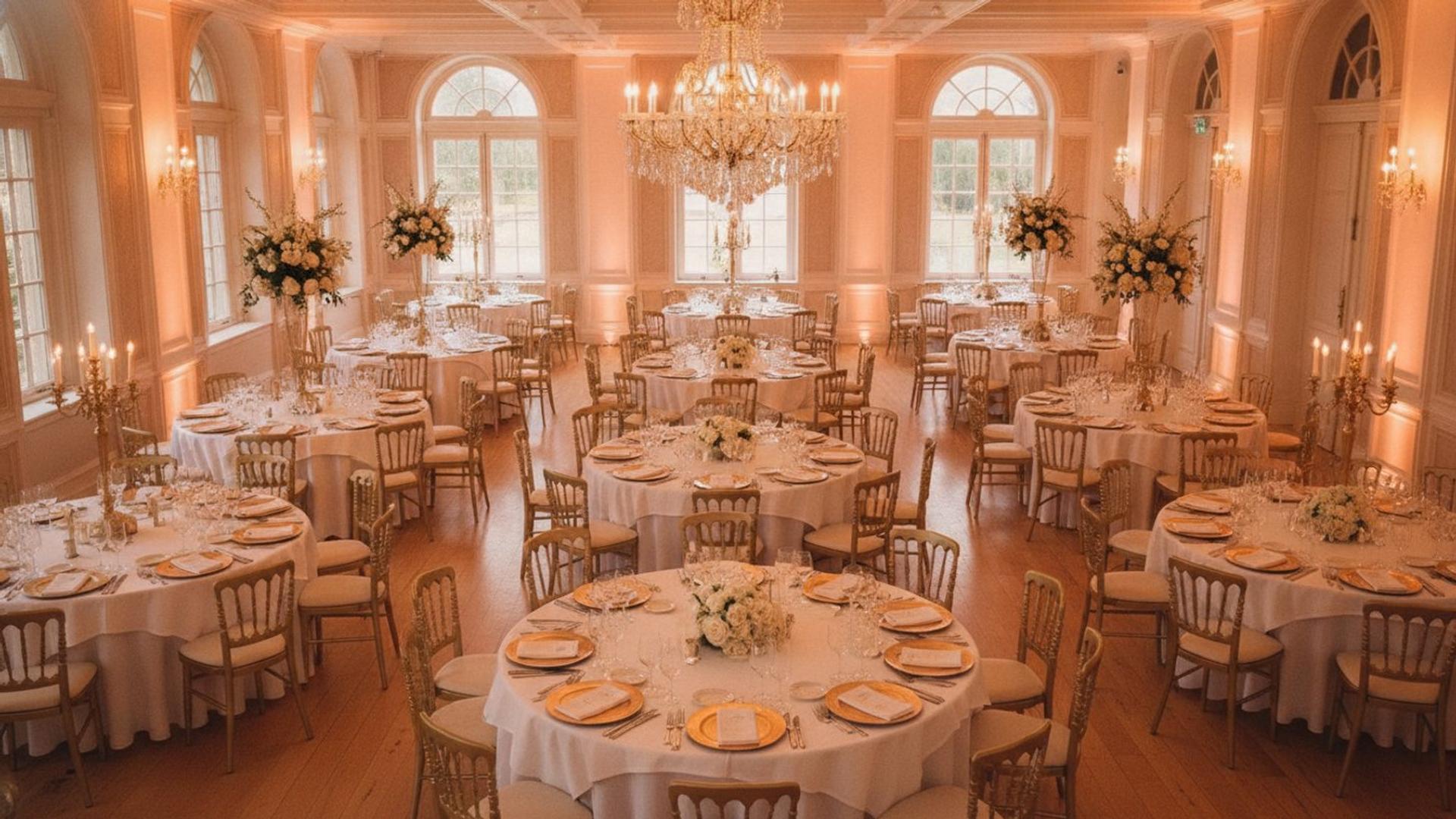
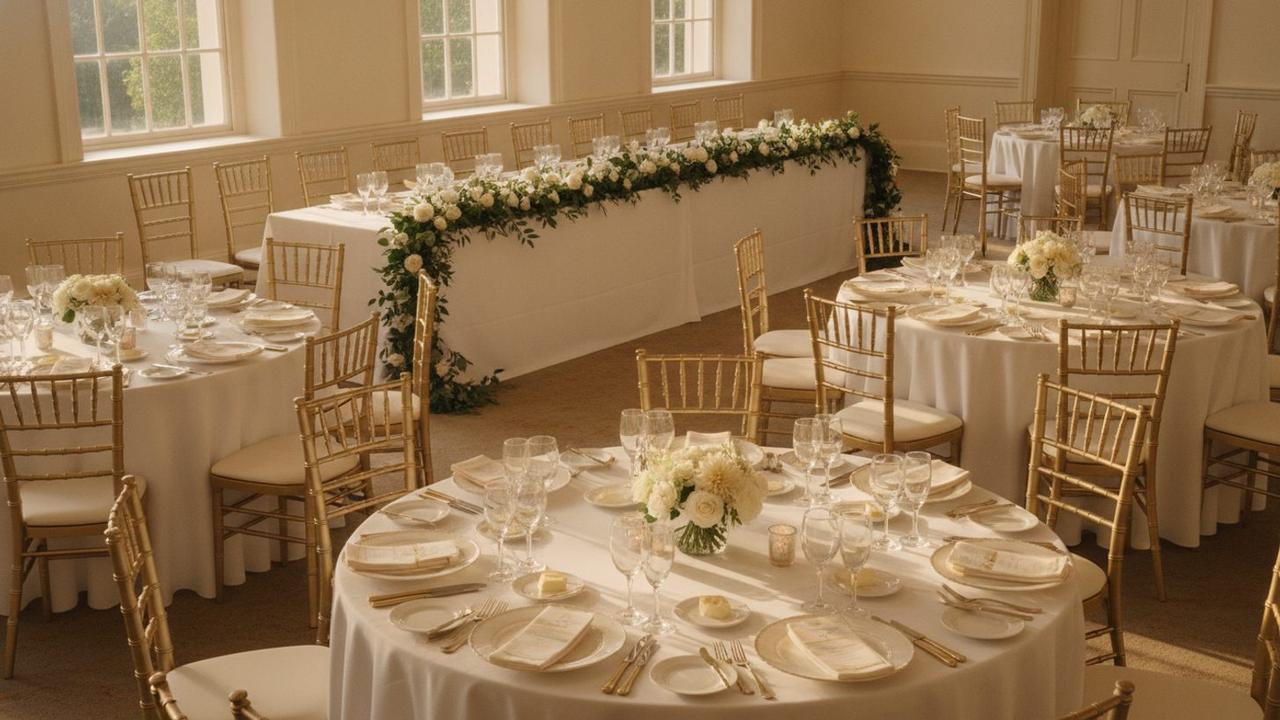
AI-generated image
Wedding seating plan etiquette comes down to three things: put the people closest to you nearest to you, keep anyone who would be uncomfortable together at a kind distance, and make sure nobody feels left out. Tradition gives you a starting point for the top table, but you do not have to follow it. If your families are complicated, a different top table, or none at all, is often the most gracious answer.
This guide covers the traditional top table order and its modern alternatives, where to seat divorced parents and step-parents, how to handle family who do not get along, and the smaller questions every couple meets: exes, children, single friends and the people who know nobody.
Who sits at the top table: the traditional order
The traditional British top table is a single long table facing the room, with the wedding party and both sets of parents. Read from left to right as the guests look at it, the traditional order given by Debrett's is:
- Chief bridesmaid
- Father of the groom
- Mother of the bride
- Groom
- Bride
- Father of the bride
- Mother of the groom
- Best man
In this order the couple sit in the middle, each parent sits beside someone from the other family, and the chief bridesmaid and best man sit at the ends. Debrett's, the etiquette guide, explains that the order dates from a time when the bride's parents paid for the wedding and were its hosts. It notes that many weddings are now hosted by the couple themselves, and that it is perfectly acceptable to set the traditional top table aside.
Swap the roles to suit your wedding; Debrett's notes that its guidelines adapt easily for same-sex couples. Two brides, two grooms, a man of honour or a best woman all fit the same pattern: the couple in the middle, parents beside them, the wedding party at the ends.
Modern alternatives to the top table
If the traditional order does not fit your family, these are the common alternatives:
- A sweetheart table. Just the two of you, at a small table of your own. Nobody has to be placed beside anybody, and parents each host a table of their own family and friends.
- A wedding party table. The top table seats your attendants and their partners, and parents host their own tables nearby.
- A family top table. Both families, with the wedding party at tables close by. This works when everyone gets on.
- No top table. You sit at a round table among guests, or move between tables during the meal. This suits relaxed and smaller weddings.
Whichever you pick, if you are having speeches, Debrett's suggests seating the speech-givers at the same table or adjacent tables, in a central position where everyone can see and hear them.
Where to seat divorced parents at a wedding
There is no single right answer. It depends on how well your parents get on now, and on what they would prefer. Ask them, separately and early. Being asked is kinder than being surprised on the day.
If they are on good terms, both can sit at the top table. Put one on each side of the two of you, or put members of the wedding party between them, so nobody sits directly beside an ex-partner.
If things are polite but strained, give each parent a table of their own to host, close to the front and an equal distance from you. Seat each one with the people they are most comfortable with, such as their own siblings and close friends. Equal distance matters more than people expect: one parent at the front and the other at the back can feel like a statement.
If there is real tension, choose a sweetheart table or no top table at all, so the question of who sits beside you disappears. Debrett's suggests this too: forgoing the top table avoids complications with divorced parents, who can then sit at separate tables. Seat the two parents on opposite sides of the room, with tables of friends and wider family between them.
Seating step-parents and new partners
A step-parent who raised you belongs wherever a parent would sit. For new partners, the simplest rule is that a partner sits with the parent they came with. If that puts a parent's new partner on the top table beside the other parent's empty seat, choose one of the alternatives above instead.
When a parent and step-parent would both expect a top table seat, a larger top table, or a table of their own for each parent's household, avoids anyone being placed lower than they feel they should be. Debrett's also notes that the couple need not feel obliged to sit with their families at all, particularly when step-parents are involved.
Family who don't get along
For relatives who do not get on, distance is kinder than proximity:
- Never seat them at the same table. Even polite people struggle through three courses side by side.
- Avoid direct sightlines where you can, such as two tables facing each other across a small room.
- Give each a natural group to sit with, so separating them looks like ordinary planning rather than a decision about them.
- Brief one trusted person at each table, such as a cousin or a close friend, who can steer the conversation if needed.
You do not need to explain your seating plan to anyone. A plan that keeps the peace quietly is doing its job.
Exes, children, single friends and the guest who knows nobody
- Exes. If an ex is coming with a new partner, or alongside your own partner's friends, seat them at different tables and do not put either beside the dance floor where they will be on show.
- Children. Seat young children with their parents. A children's table can work for older ones, with a responsible adult or a teenager nearby, and close enough for parents to see.
- Single friends. Avoid a "singles table". Seat single friends with people who share their interests, or with a friendship group they already know.
- The guest who knows nobody. Put them beside the friendliest person you know, ideally someone who shares a job, a hobby or a home town. A quick introduction before the meal helps too.
How to build an etiquette-proof seating plan in Fizz
The Fizz wedding seating planner is included on every plan, and it has a tool for each of the situations above:
- Table roles. Each table can be a guest table, a top table, a sweetheart table or a kids table. Change a table's role at any time.
- Seating rules. Add an "apart from" rule between any two people who should not share a table, and a "sits with" rule for people who should. Couples and their plus-ones stay together automatically.
- Arrange for me. Fizz seats every confirmed guest who has no seat yet. It keeps each household together, follows your rules, and fills the top table with your wedding party first. Parents are not a wedding party role, so seat them at the top table by hand before you press Arrange for me. It leaves two seats at the first top table for the two of you, unless you have a sweetheart table.
- Reserved tables. Reserve wedding party roles at a table, such as the bridesmaids at table two, and Fizz seats them there.
- Chair by chair. Drag a guest onto a chosen chair, or onto another guest to swap them. This is how you set the traditional top table order exactly.
- Children together. Add a kids table, then tick "Seat children together at the kids table" before you press Arrange for me.
- The floor plan. Add the dance floor, the band or DJ, the bar and the entrance, then drag your tables into place. Use it to keep each parent's table an equal distance from you, to put relatives who don't get on at opposite sides of the room, and to keep an ex away from the dance floor.
- The seating assistant. Ask the AI assistant about your plan in plain language, such as "Who still needs a seat?". It suggests changes, and nothing moves until you confirm them. Every plan includes a number of questions every 30 days, and higher plans include more.
- Your judgement wins. The rules guide Arrange for me, but you can drag anyone anywhere afterwards. If a move breaks one of your rules, Fizz tells you and still lets you make it, so the final word is always yours.
- What Fizz leaves to you. Seating rules work table by table. Fizz does not measure the distance or the sightlines between tables, so place the tables for anyone who doesn't get on yourself, on the floor plan. When guests find their seat, they also see who sits next to them, so choose an ex's neighbours with that in mind.
Your seating rules and wedding party roles are never shown to guests. When the plan is ready, tick "Show to guests", and guests can find their name on your wedding website with the "Find your seat" search.
If you are seating a large guest list, our guide to planning a seating chart for a big wedding covers the logistics, and wedding party roles explained shows how roles flow onto the top table. For the shape of the tables themselves, see wedding table layouts compared.
Your seating etiquette checklist
- Decide on a top table, a sweetheart table, a wedding party table or none.
- Ask each parent, separately, how they would like to be seated.
- Give hosting parents tables an equal distance from you.
- Keep anyone who does not get on at different tables, out of each other's sightline.
- Seat speech-givers centrally, where everyone can see and hear them.
- Seat young children with their parents.
- Seat single friends and lone guests with people they will like.
- Add your "apart from" and "sits with" rules before you arrange.
- Check the finished plan once more before you share it with guests.
Disclaimer
Wedding etiquette is a matter of custom, not rules, and it varies between families, faiths and cultures. This article is general guidance only. Fizz Wedding Ltd accepts no liability, to the extent permitted by law, for any loss resulting from reliance on it.
Sources
- Debrett's: Sorting the seating plan
Frequently Asked Questions
Relive the day, together
Invite family and friends to share their photos, videos, and well-wishes in one beautiful space.