Wedding Table Layouts Compared: Banquet, Comb, Horseshoe, Serpentine or Ring
The best wedding table layout depends on your room and your guest count. Round tables suit most rooms and let groups mix. Long banquet rows suit narrow rooms and family-style meals. A comb or E-shape suits a long hall with a top table everyone can see, a horseshoe suits a smaller crowd who all face the middle, a serpentine gives a flowing, relaxed look, and a large ring makes a single table into a centrepiece.
This guide compares the five layouts beyond the usual round table, with real seat ranges and table sizes, so you can match a shape to your room before you commit. The numbers come from the Fizz seating planner, which draws each layout to scale, so you can try them in a room set to your venue's size.
Wedding table layouts at a glance
- Banquet row: one long table, seated on both sides (8 to 56 seats) or one side (4 to 24). Best for long, narrow rooms and relaxed family-style meals.
- Comb (E shape): a head table with two to six legs running off it (from 8 seats up to 74 or 80). Best for large weddings in a big hall.
- Horseshoe (U shape): seats outside only (12 to 40) or both sides (20 to 60), with a service space in the middle. Best for 20 to 60 guests who should all see each other.
- Serpentine: an S-wave of curved tables, from 6 to 20 seats on two curves up to 12 to 50 on five. Best for a soft, informal look and smaller rooms.
- Large ring: a circle with a centrepiece, seating 16 to 40 outside or 32 to 60 inside and out. Best as a feature table or a single big family table.
Banquet rows: long tables for a family-style feel
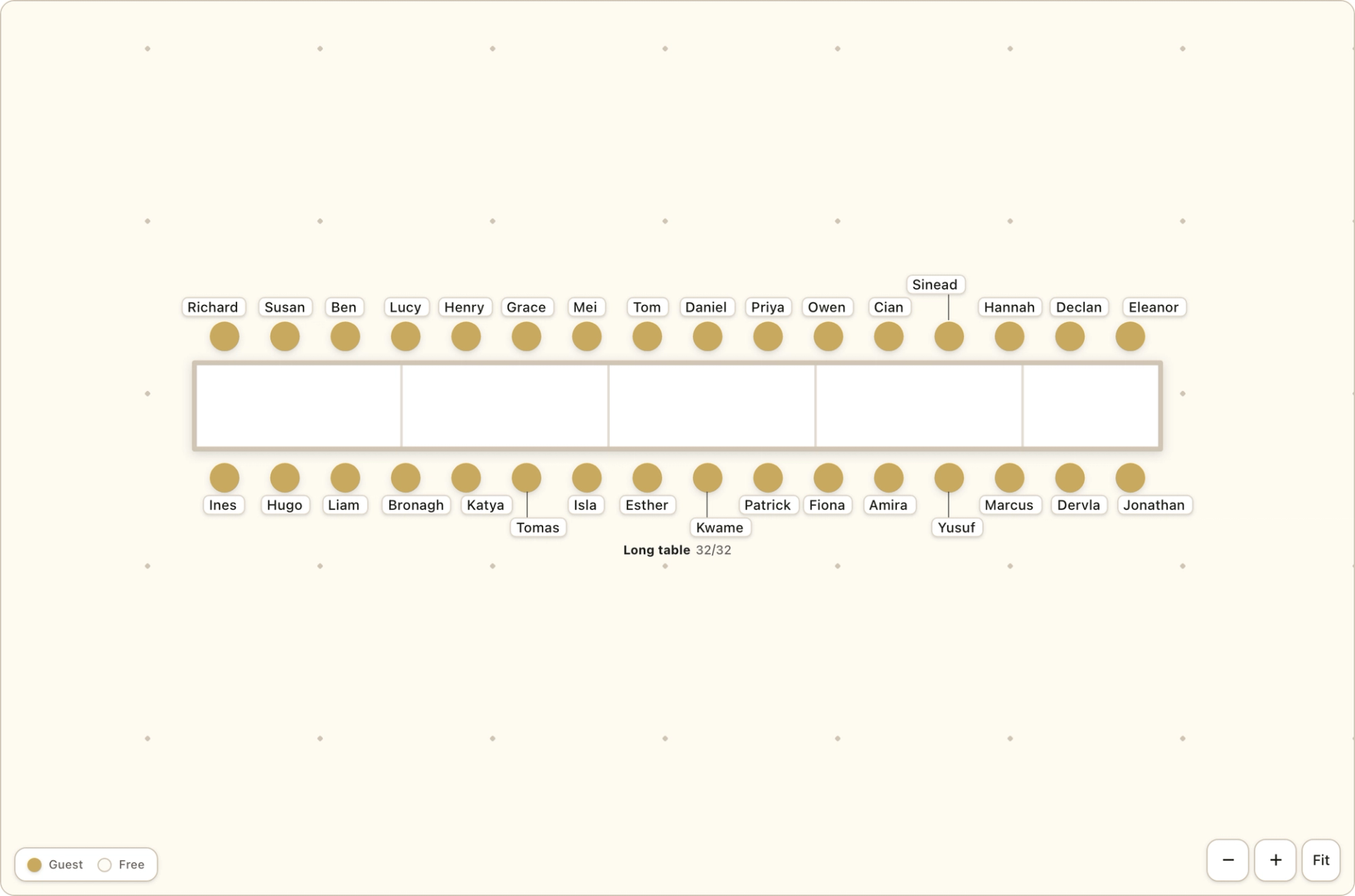
A banquet row is a run of trestle tables joined end to end. Everyone sits along the same table, so it feels like one big family meal, and it is often the most economical way to fit a lot of guests into a long, narrow barn or hall.
In the planner a banquet row seated on both sides holds 8 to 56 people. At the default 24 seats it is about 21 feet long, and a full 56 seats run to around 49 feet, so check the length of your room before you go big. Seated on one side only, it holds 4 to 24 and reaches 42 feet at the top end.
The trade-off is conversation. People talk to their neighbours and the people opposite, but the far end of a long table can feel a world away, so put people who know each other in the middle of each stretch.
Comb (E shape): a top table everybody can see
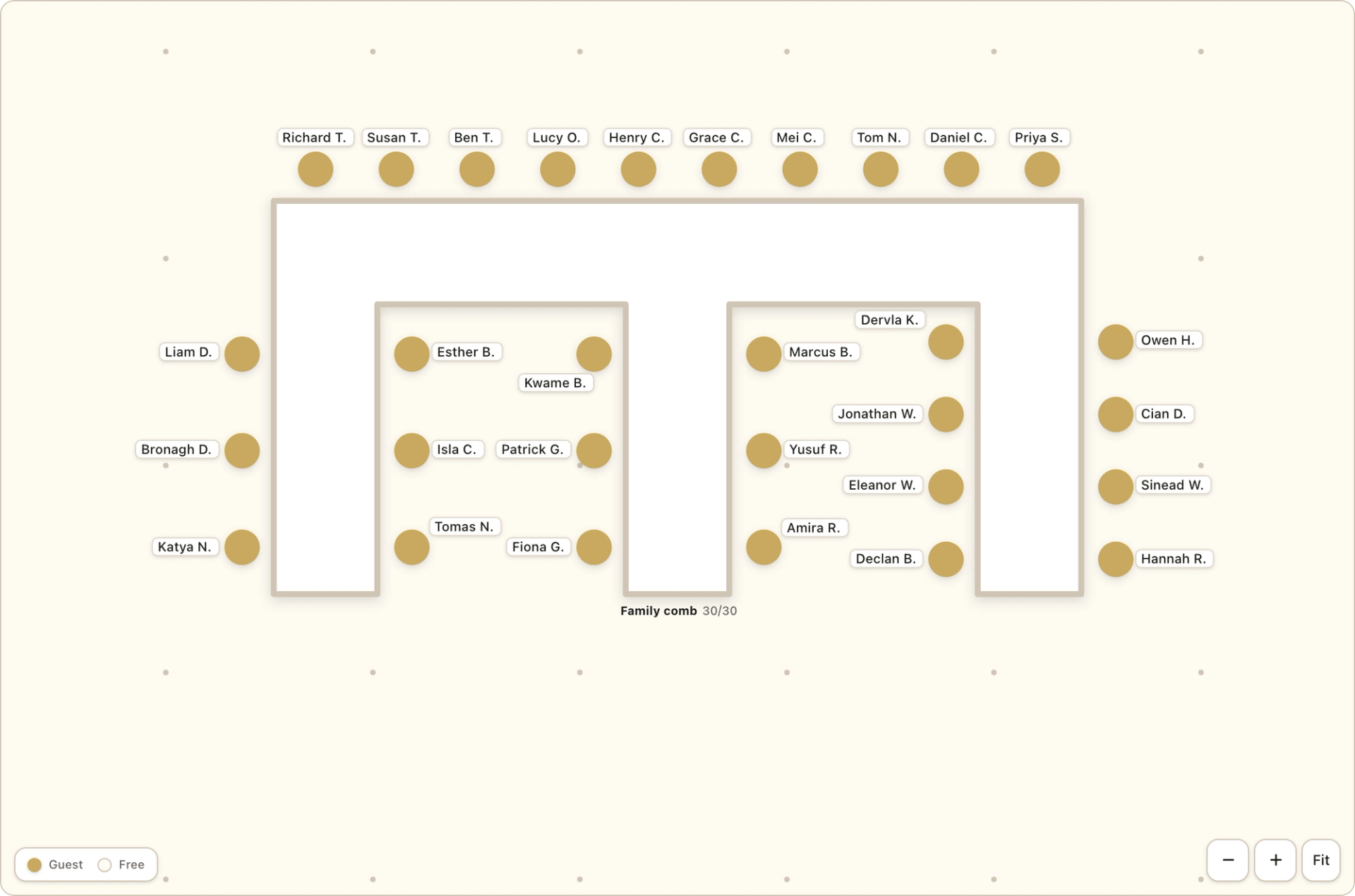
A comb has a head table across the top and a number of long legs coming off it, like a comb or the letter E. The head table is seated on the outside only, facing the room, which suits a wedding party, and guests sit along the legs.
It suits big guest lists in big rooms. With two legs it holds 8 to 74 people, and with three to six legs the planner lets you reach 80, the most any single table can hold. The planner needs at least 4 seats per leg, so the smallest comb, with two legs, starts at 8. In the planner the legs sit 6 feet apart, so ask your venue and caterer whether that leaves the service aisle their staff need.
The comb's strength is sightlines: everyone can see the top table for the speeches, and the legs keep guests in familiar groups. Its weakness is footprint, since a big comb takes a large part of the floor.
Horseshoe (U shape): everyone faces the middle
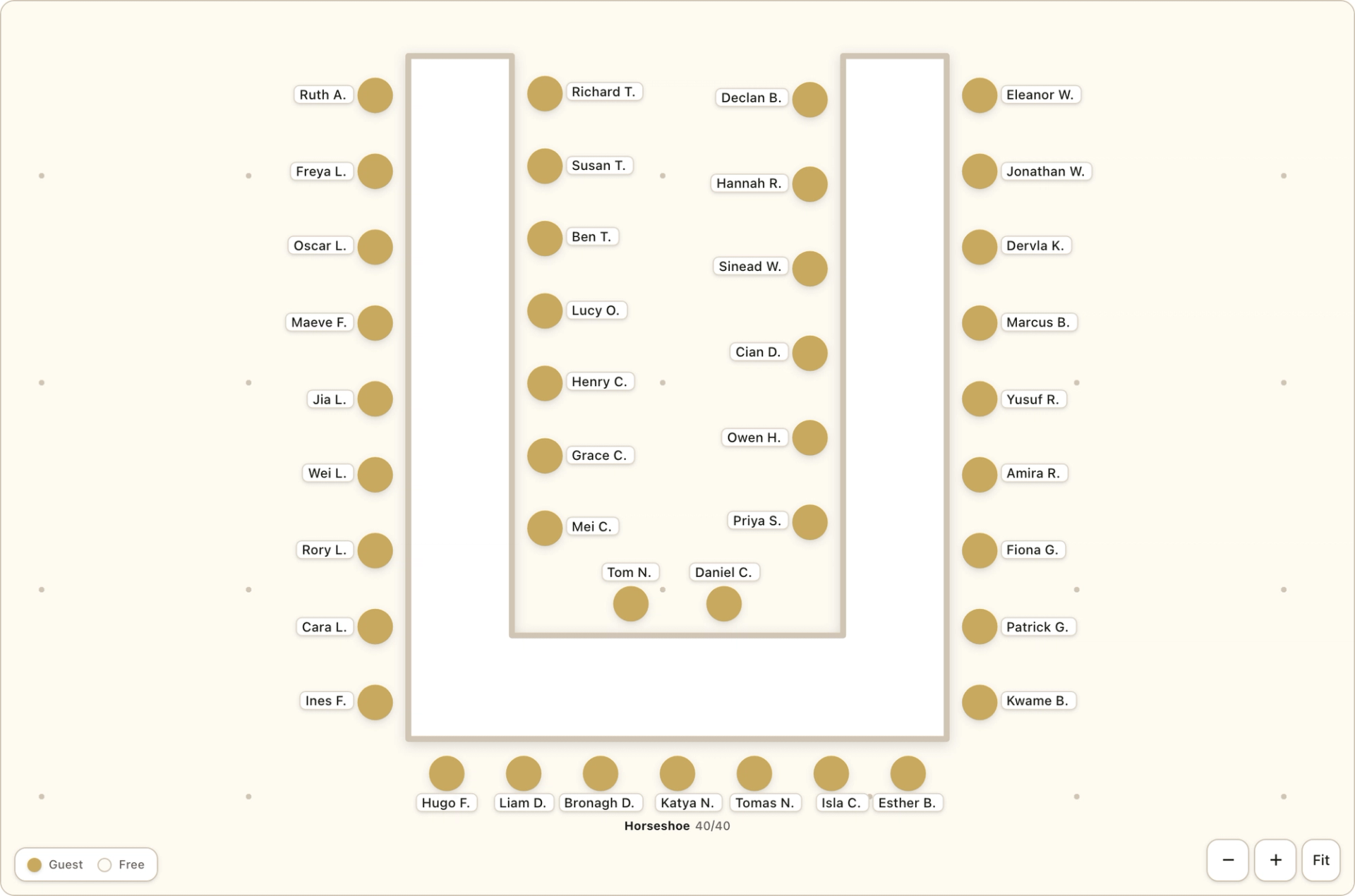
A horseshoe is a U of tables with the open end towards the room and a clear space inside for servers, a speech or entertainment. Seated on the outside only it holds 12 to 40, and seated on both sides it holds 20 to 60.
It is a good fit for a smaller wedding of about 20 to 60 guests. A 24-seat horseshoe, seated outside, is about 13 by 16 feet, and a full 40-seat one about 28 by 22 feet. The couple can sit at the base of the U, so everyone faces them.
The catch is service. The middle needs to stay clear, and with guests on both sides those on the inside have their backs to it, so agree with your caterer how food will reach the table.
Serpentine: a flowing, informal wave
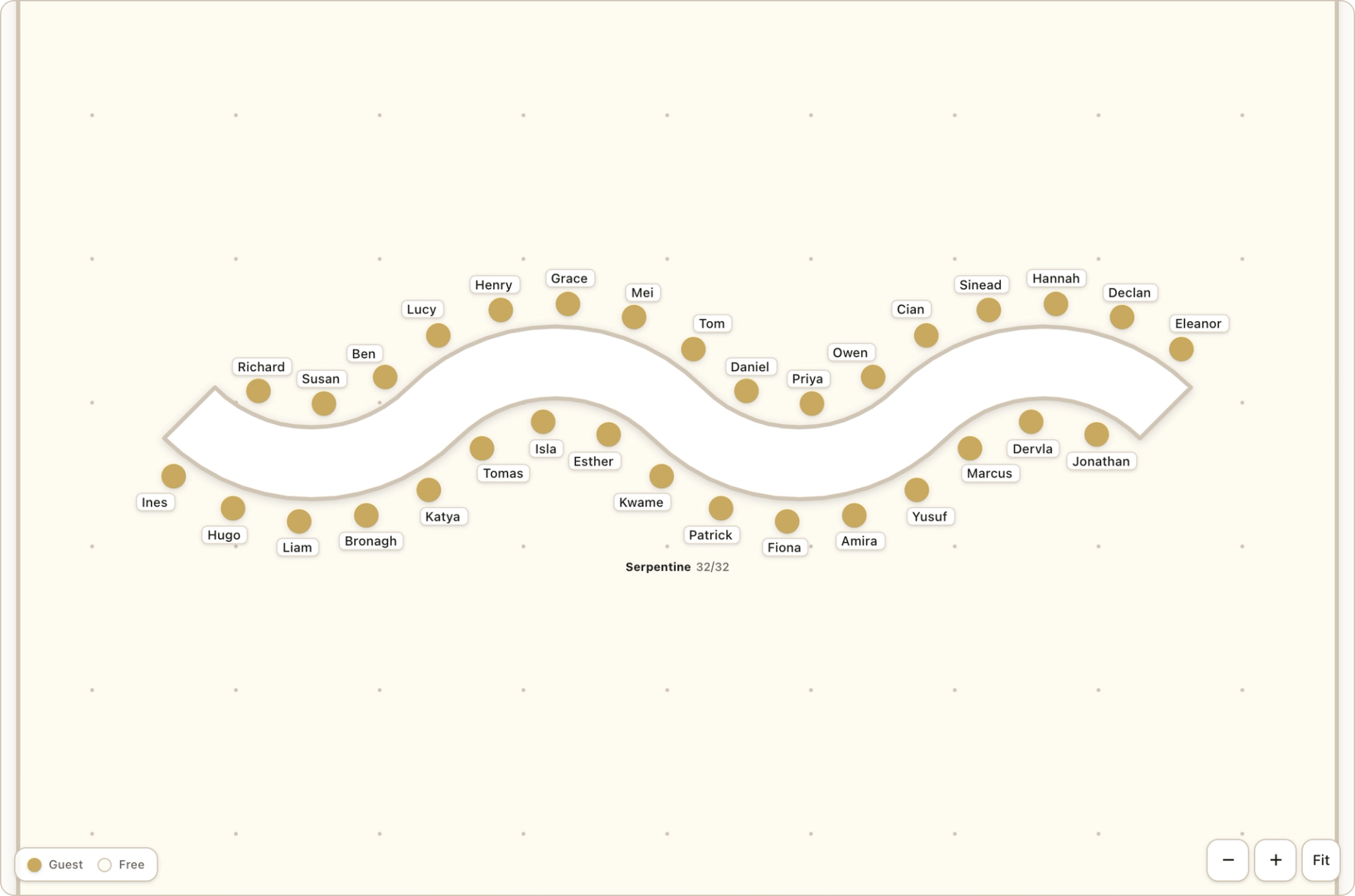
Serpentine tables are curved sections joined into an S. A serpentine with two curves holds 6 to 20 people, and each extra curve adds more, up to 12 to 50 on five curves, around 44 feet long.
It suits smaller weddings, cocktail-style dinners and rooms where straight lines feel stiff. It also breaks up a long wall of tables. Because it is a single flowing table, it works less well for large seated meals where each family wants its own table.
Large ring: a centrepiece you can sit around
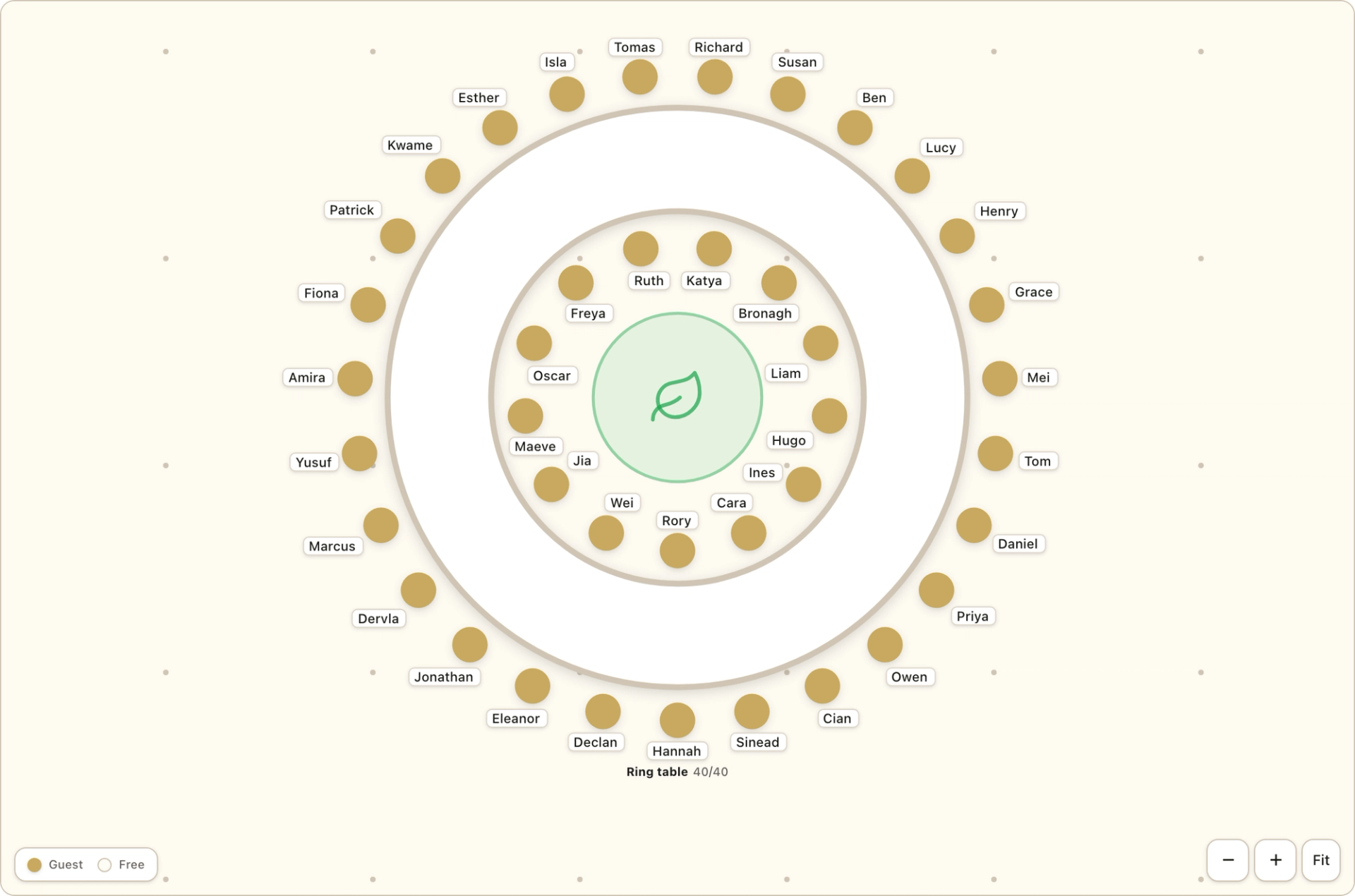
A ring is one big circular table with a gap in the middle for flowers or greenery. Seated on the outside it holds 16 to 40 (about 9 to 21 feet across), and seated inside and out it holds 32 to 60.
It is the friendliest layout for a single big group, such as a family or a wedding party, because everyone can see everyone. It is a poor choice for a whole reception, since it takes up a lot of floor for the number of seats.
How to choose the right wedding table layout
- Start with your room. Long and narrow points to banquet rows or a comb. Square or open points to round tables, a horseshoe or a ring.
- Then your guest count. Under 30 suits a single banquet row, ring or serpentine. 30 to 60 suits a horseshoe. 100 or more suits round tables and a comb.
- Think about your top table. If you want the wedding party seen by everyone, a comb or horseshoe puts them in view.
- Mix shapes. Nothing says a room must use one. Round tables for most guests and one long row for the wedding party is a common, sensible mix.
If you are seating a big guest list, see our guide to how to plan a seating chart for a big wedding. And if your top table is for the wedding party, read wedding party roles explained to see how Fizz seats them first.
How to build each layout in Fizz
- Open the seating planner on your wedding page.
- Choose + Add table. A picker opens with the layouts grouped as Round and rectangular, Long banquet rows, Comb (E shape), Horseshoe (U shape), Serpentine and Large rings.
- Pick a layout. Each card shows its seat range.
- Set the number of seats in the table panel. The range for that layout is shown beside the Seats box, and the table grows to fit.
- Use Rotate to turn it in 45-degree steps (round tables and rings do not need it).
- To change your mind, open the Layout setting in the table panel, which shows the current layout's name, and pick another. Seat numbers keep their place, and Fizz will not let you switch to a layout too small for the guests already seated.
- Choose Arrange for me to seat your confirmed guests, then adjust by hand.
Guests see the same shapes on the plan you share, and the printable plan and caterer breakdown include them.
Aim to seat names once your RSVPs have mostly settled, and see how to set up online RSVPs for your wedding if you have not started collecting them.
To try the layouts against your own room, open the Fizz wedding seating planner.
Frequently Asked Questions
Capture every angle of your wedding day
A wedding page brings together photos, videos, and messages from everyone who was there.