The Paperless Wedding: How to Plan and Share It All Digitally
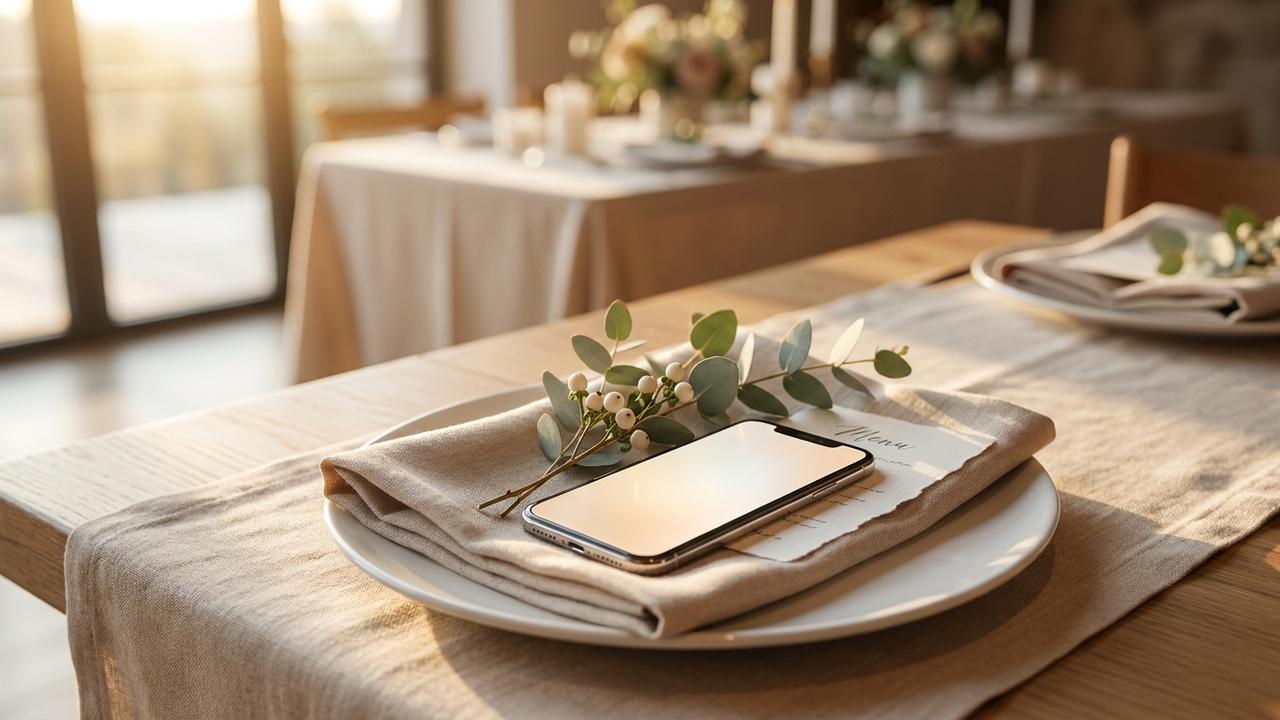
AI-generated image
A traditional wedding involves more paper than almost any other day in your life. Save-the-dates, invitations, RSVP cards, detail inserts, ceremony programmes, menus, place cards, table numbers, signage, favour tags, thank-you cards. For a hundred guests, that is easily a thousand or more printed pieces, most of which are looked at once and thrown away.
A paperless wedding swaps almost all of it for digital alternatives that are cheaper, easier to update, kinder to the planet, and, done well, more useful to your guests. This is the complete guide: every paper item and its digital replacement, the etiquette of going paperless without seeming impersonal, where a little paper still earns its place, and how to build the digital backbone that holds it all together.
What is a paperless wedding?
A paperless wedding replaces printed stationery and signage with digital equivalents, save-the-dates, invitations, RSVPs, programmes, menus and thank-yous handled online or on screens, usually with a wedding website as the central hub. It does not have to mean zero paper; most couples go mostly digital and keep one or two physical touches that matter to them.
The appeal is practical as much as environmental: digital details can be updated after they are sent, cost a fraction of print and postage, and gather everything in one place guests can reach from their phones.
Why go paperless: the real numbers
Going paperless cuts cost, waste and admin, and the waste in particular is larger than most couples realise. Industry and sustainability groups estimate that a single printed invitation suite carries a meaningful carbon cost once you count paper, printing and postage both ways, and that a typical wedding generates a surprising amount of paper waste across all its stationery.
Treat the specific figures as directional rather than precise, methodologies vary, but the direction is not in doubt: fewer printed pieces means less waste, lower cost and less to coordinate. The trend is clear too, with a growing share of couples now choosing digital invitations and QR-code details, and interest in sustainable weddings rising year on year.
The complete paper-to-digital map
Almost every piece of wedding paper has a digital replacement, and here is the full map. Use it as your checklist for what to move online.
- Save-the-date: traditionally a printed card; digitally, a website link or e-card. Hybrid: a small printed card pointing to the site.
- Invitation suite: traditionally a printed set; digitally, a website invitation. Hybrid: a single printed card with the website for detail.
- RSVP card: traditionally a card and return envelope; digitally, an online RSVP form. Hybrid: online plus phone for offline guests.
- Details insert: traditionally a printed insert; digitally, website pages for travel, accommodation and FAQ.
- Ceremony programme: traditionally printed; digitally, a QR code or website page. Hybrid: a few printed copies for those who want them.
- Menu: traditionally a printed card per setting; digitally, a QR code or table display.
- Escort and place cards: traditionally printed; digitally, a digital seating display or screen.
- Table numbers: traditionally printed; digitally, simple reusable signage.
- Signage and directions: traditionally printed boards; digitally, screens or a website page.
- Favour tags: traditionally printed; digitally, a small sign explaining a digital or charitable favour.
- Thank-you cards: traditionally posted; digitally, personal emails or website messages. Hybrid: print for close family.
- Guest book: traditionally a physical book; digitally, a living digital guest book.
Move even half of these online and the savings, in money, waste and effort, are substantial.
Before the wedding
The planning stage is where paperless saves you the most, because this is where most stationery lives. Your wedding website becomes the hub that replaces the printed suite.
Send save-the-dates as a link or e-card, then use the website itself as your invitation and detail centre: the story, the travel and accommodation, the FAQ, the schedule, and the dress code, all updatable after they go out. Collect responses with an online RSVP, which also removes the printing and postage of cards and return envelopes. For exactly what each page should contain, see what to put on your wedding website, and for the RSVP itself, see how to set up online RSVPs for your wedding.
On the day
On the day, QR codes and simple screens replace most printed cards and signage. A small code on each table, or a few well-placed signs, can carry the order of service, the menu and the directions, all linking to pages you can update right up to the morning of the wedding.
- Ceremony programme: a QR code on a sign or at each seat opens the order of service.
- Menus: a code per table, or a single display, shows the menu and ingredients, easy to keep current with dietary needs.
- Seating: a digital seating display points guests to their tables without a wall of place cards.
- Signage: a handful of reusable signs plus a website page covers directions and timings.
- Favours: a small note explaining a digital keepsake or a charitable donation in lieu of trinkets.
Keep one or two printed touches if they matter to you; the goal is less paper, not none at any cost.
Capturing the day
Paperless is not only about replacing stationery, it is also about capturing the day digitally so the memories are gathered, not scattered. This is where a digital guest book and guest photo sharing come in.
A digital guest book fills up through the day and keeps every message, unlike a paper book that ends up in a drawer. Guest photo sharing gathers the candids into one gallery rather than a hundred phones, and the richest version, a wedding-day app, lets guests add photos, sixty-second voice toasts and video messages that flow into your website. The full approach is in how to collect every guest photo at your wedding.
After the wedding
After the day, paperless means digital thank-yous and a website that becomes your permanent keepsake. Personal thank-you messages, by email or through your website, reach guests quickly while the day is fresh, and you can still print a few for close family who would treasure a card.
Your website then shifts from logistics to memory: the photographer's gallery, the guest photos, the voice toasts and the guest book messages, all in one place on the link guests already know. How to gather it all is covered in how to share your wedding photos after the big day.
The etiquette of going paperless: an honest take
Going paperless is not tacky, but doing it carelessly can feel impersonal, so the etiquette is about warmth, not paper. Guests do not mind a digital invitation; they mind feeling like an afterthought. Keep the tone personal, make the website beautiful, and the format is a non-issue.
A few honest points:
- Older or offline guests deserve a phone call or a printed card. Run a hybrid for them rather than leaving anyone out.
- A formal or black-tie wedding can be entirely paperless; elegance is about the design and wording, not the material.
- Some paper still earns its keep: a single beautiful invitation card, a handwritten thank-you to a grandparent, a guest book someone will keep. Choose your few physical touches deliberately.
Paperless done with care reads as thoughtful and modern, not cheap.
Building your digital backbone
A paperless wedding works best when one platform is the backbone, rather than a different tool for each job. The risk of going digital is swapping a pile of paper for a pile of apps, an invitation tool, an RSVP tool, a photo app, a separate gallery, none of which talk to each other.
The cleaner approach is a single platform that carries the whole arc: the website for invitations, details, RSVP and FAQ before the day; a digital guest book and guest photo sharing during it; and a permanent gallery afterwards. This is what Fizz is built to be, a wedding website and a companion capture app in one, so your save-the-date, your details, your RSVPs, your guest book and your photos all live in the same place. The companion app, coming soon, adds wedding-day capture, voice toasts and video that flow straight onto the site. See how it fits together on the companion app page.
The short version
A paperless wedding swaps printed stationery for digital alternatives that cost less, waste less and gather everything in one place. Map each paper item to its digital replacement, keep a few meaningful physical touches, look after your older guests with a hybrid, and build it all on one digital backbone, a wedding website that handles the planning, the capture and the keepsake. That is a wedding that is lighter to plan, kinder to the planet, and easier to relive.
Frequently Asked Questions
A place to return to, whenever you like
Create a wedding page you can come back to today, on your anniversary, and for years to come.